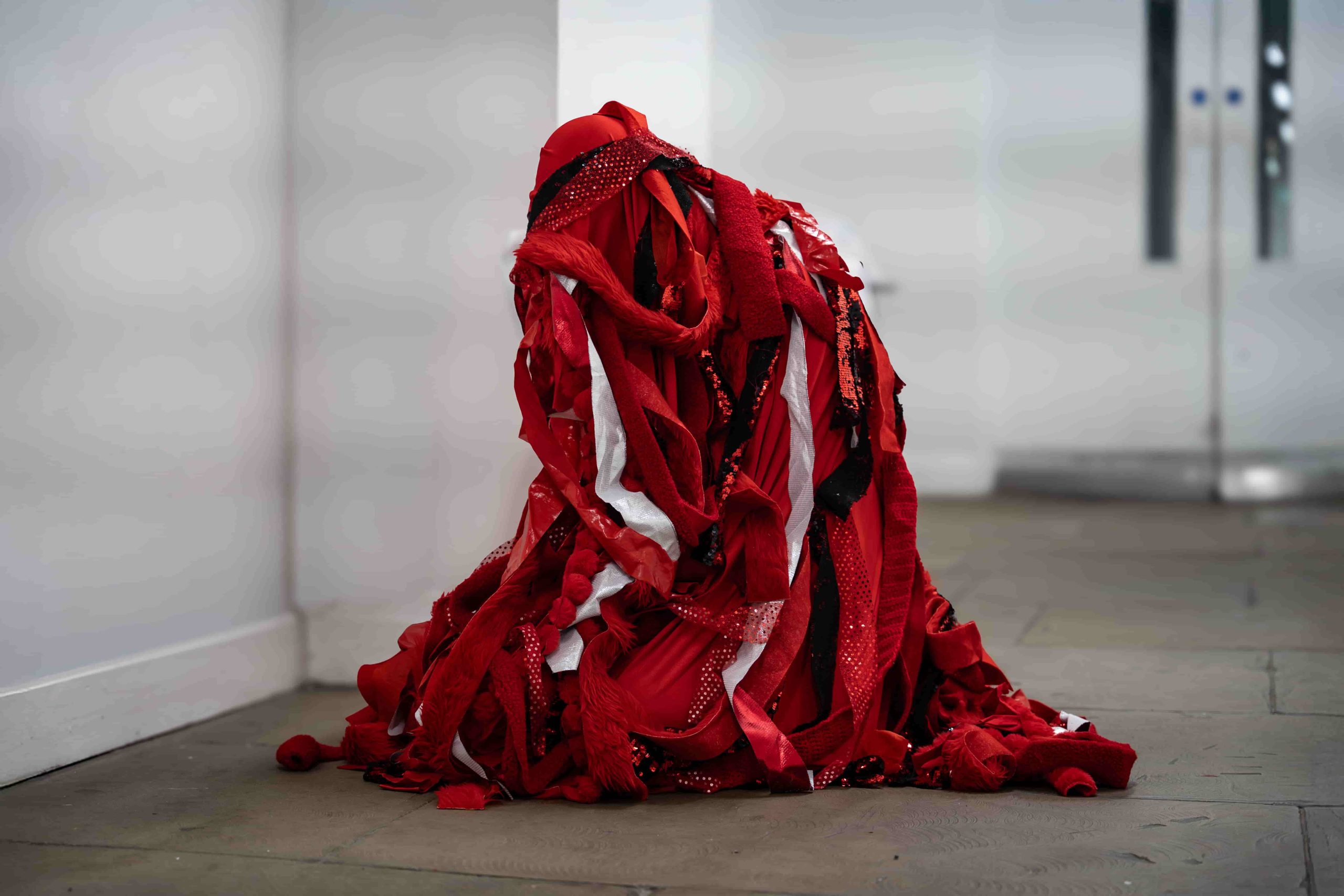
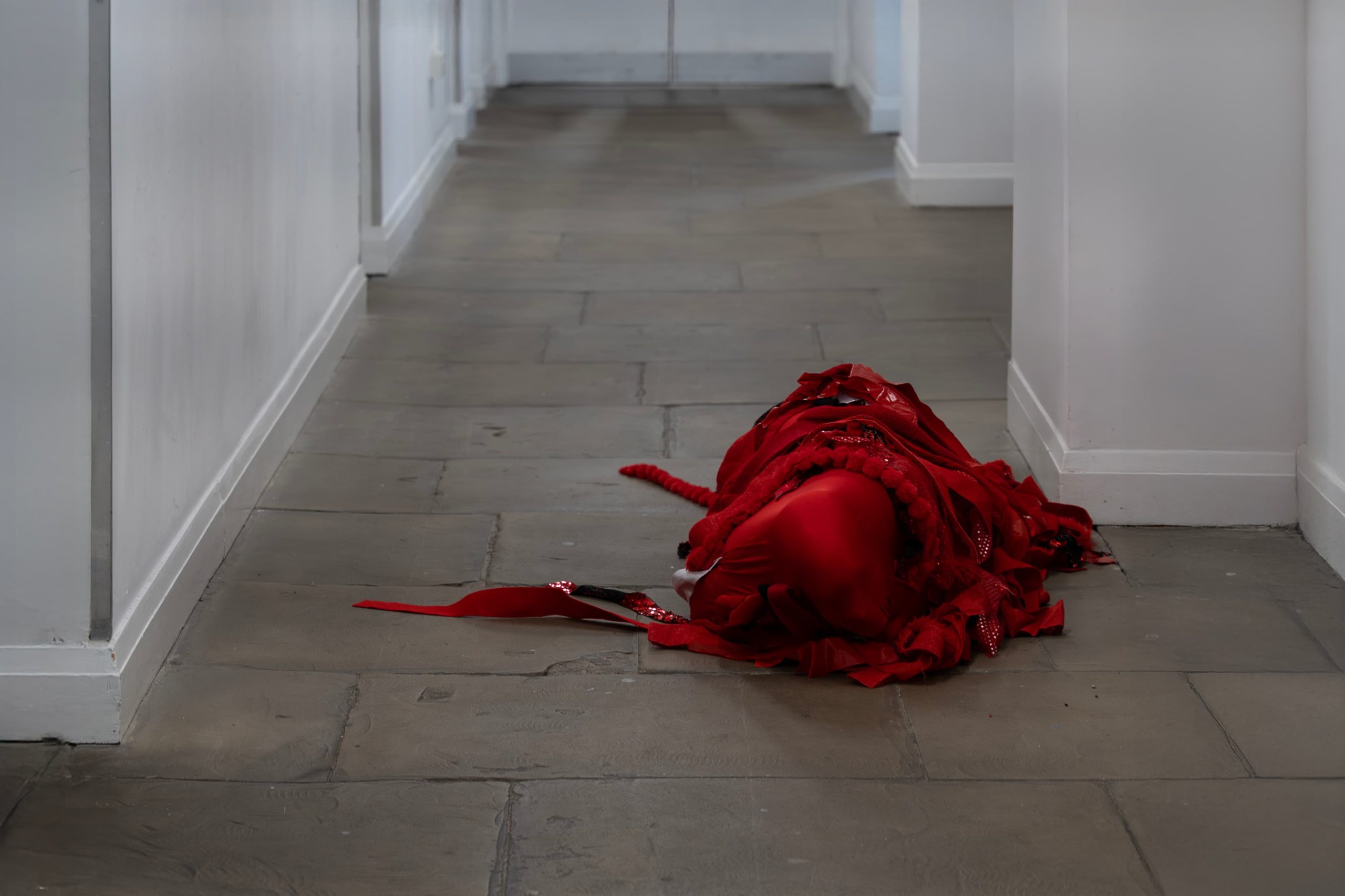
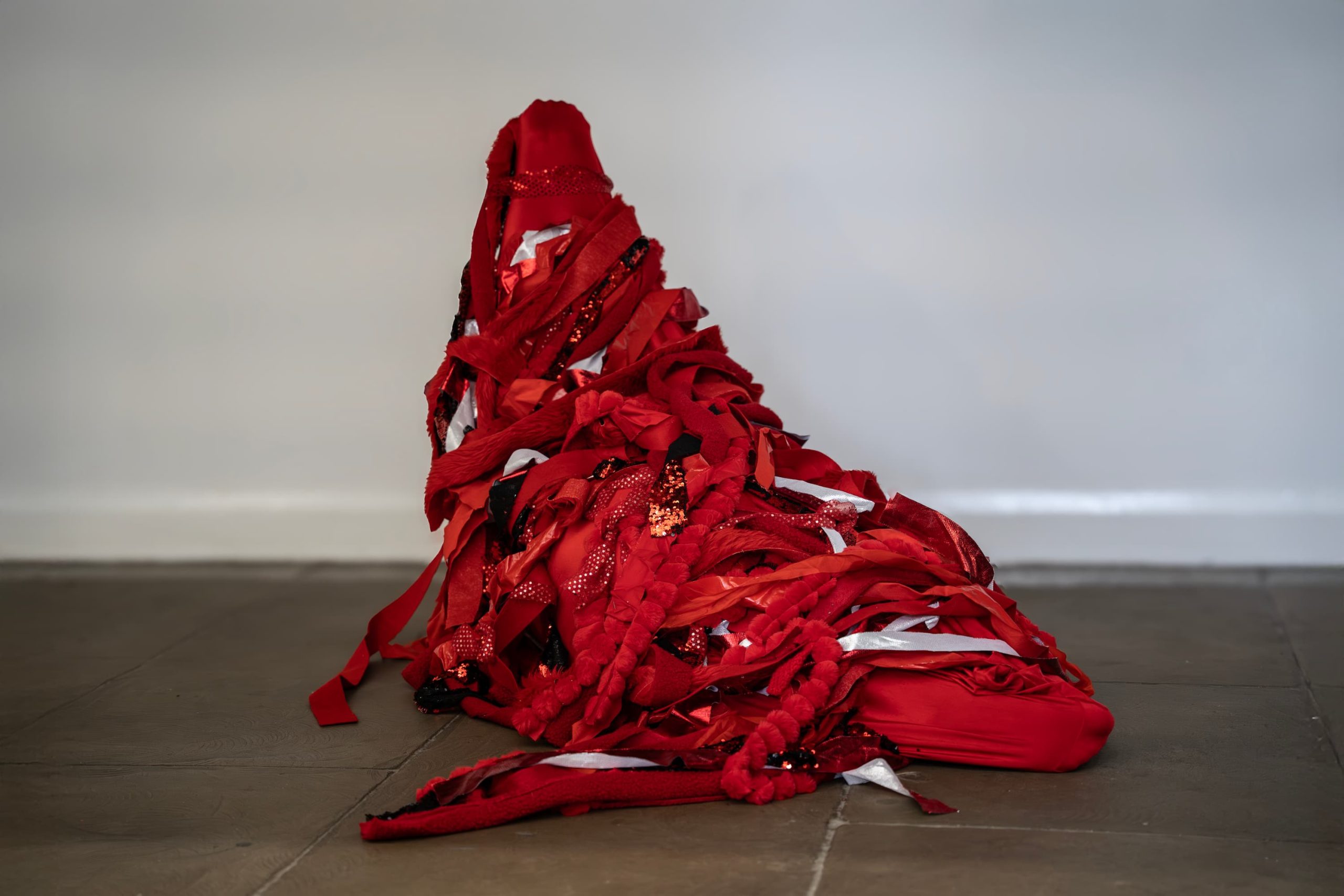
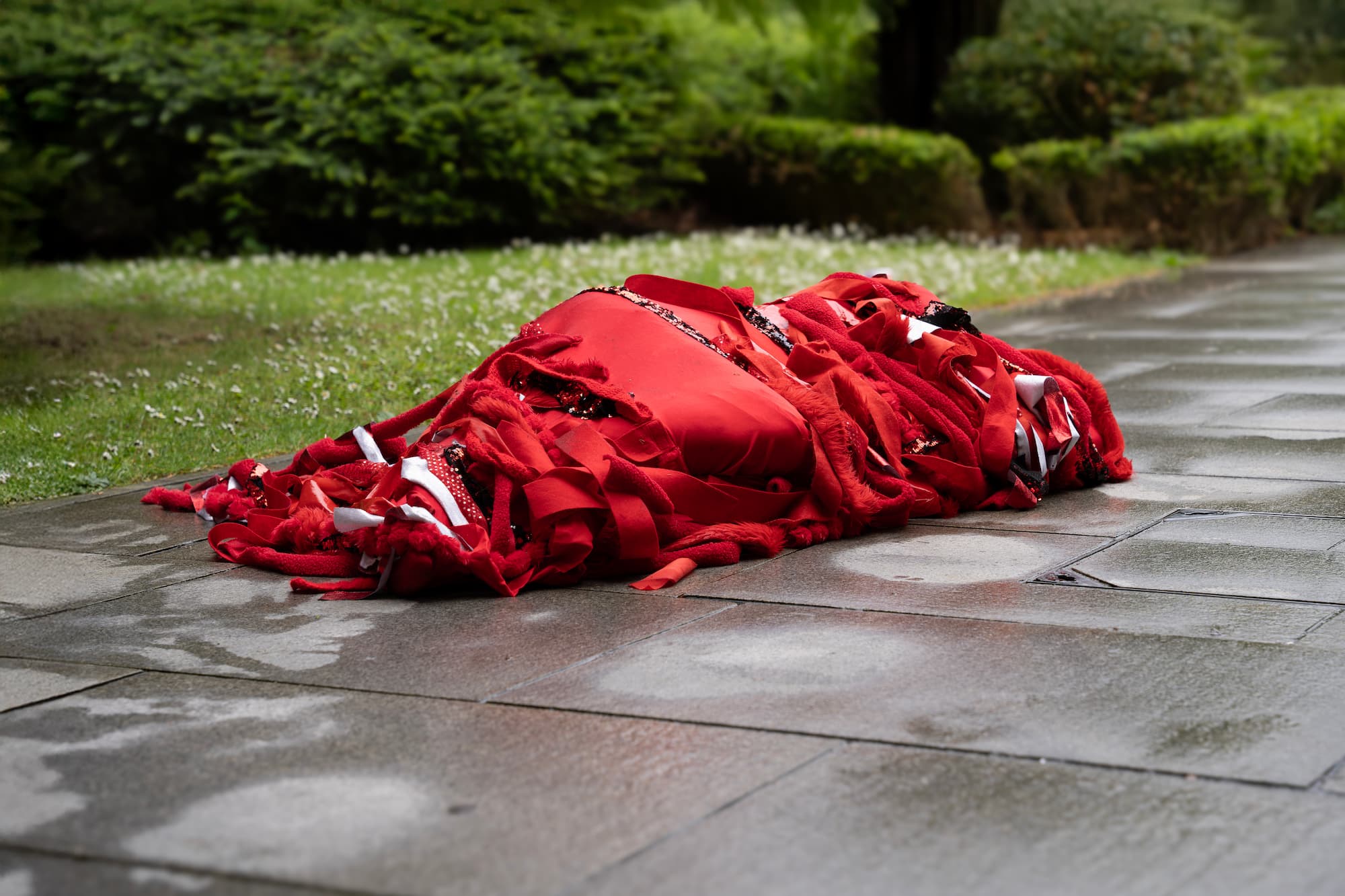
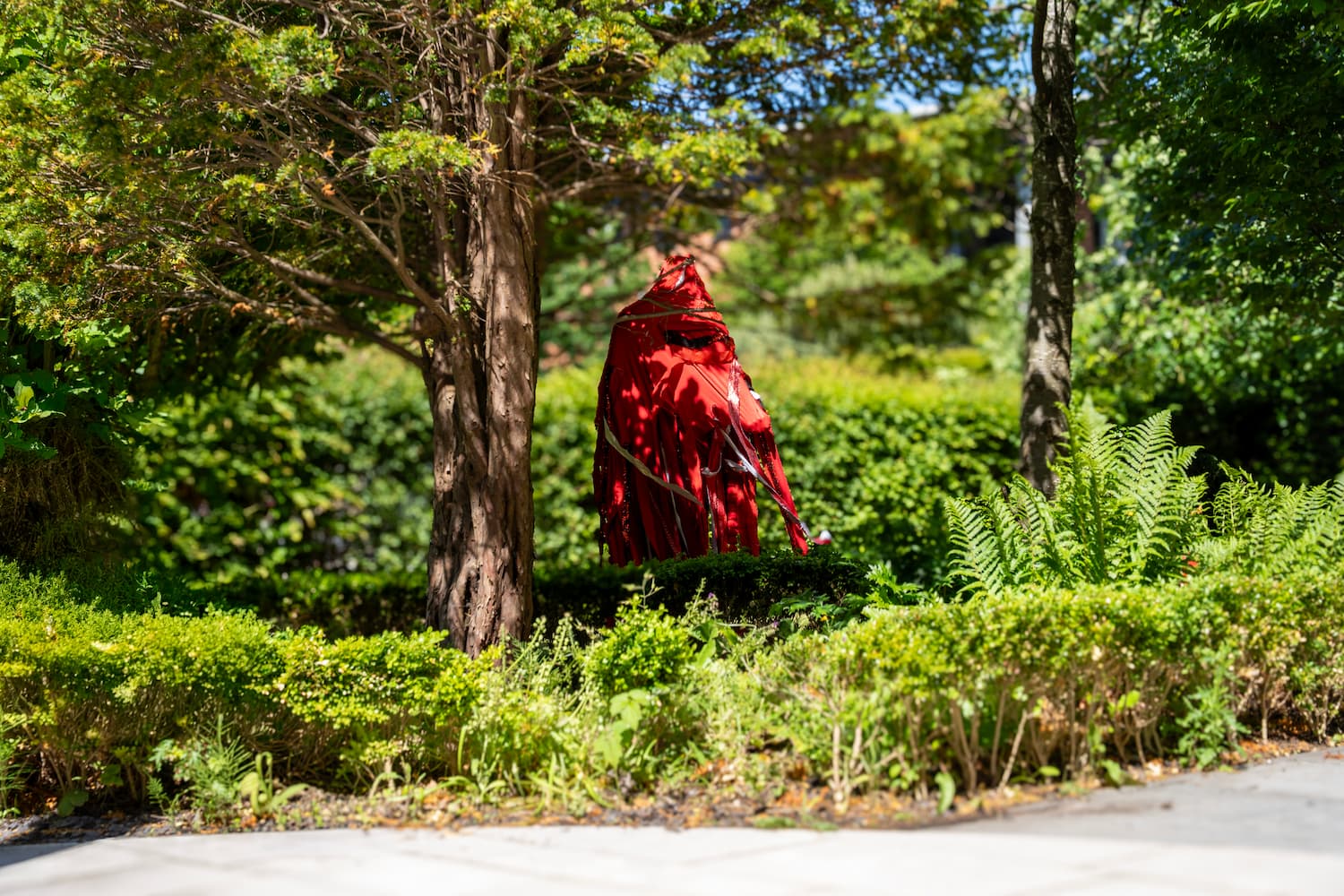
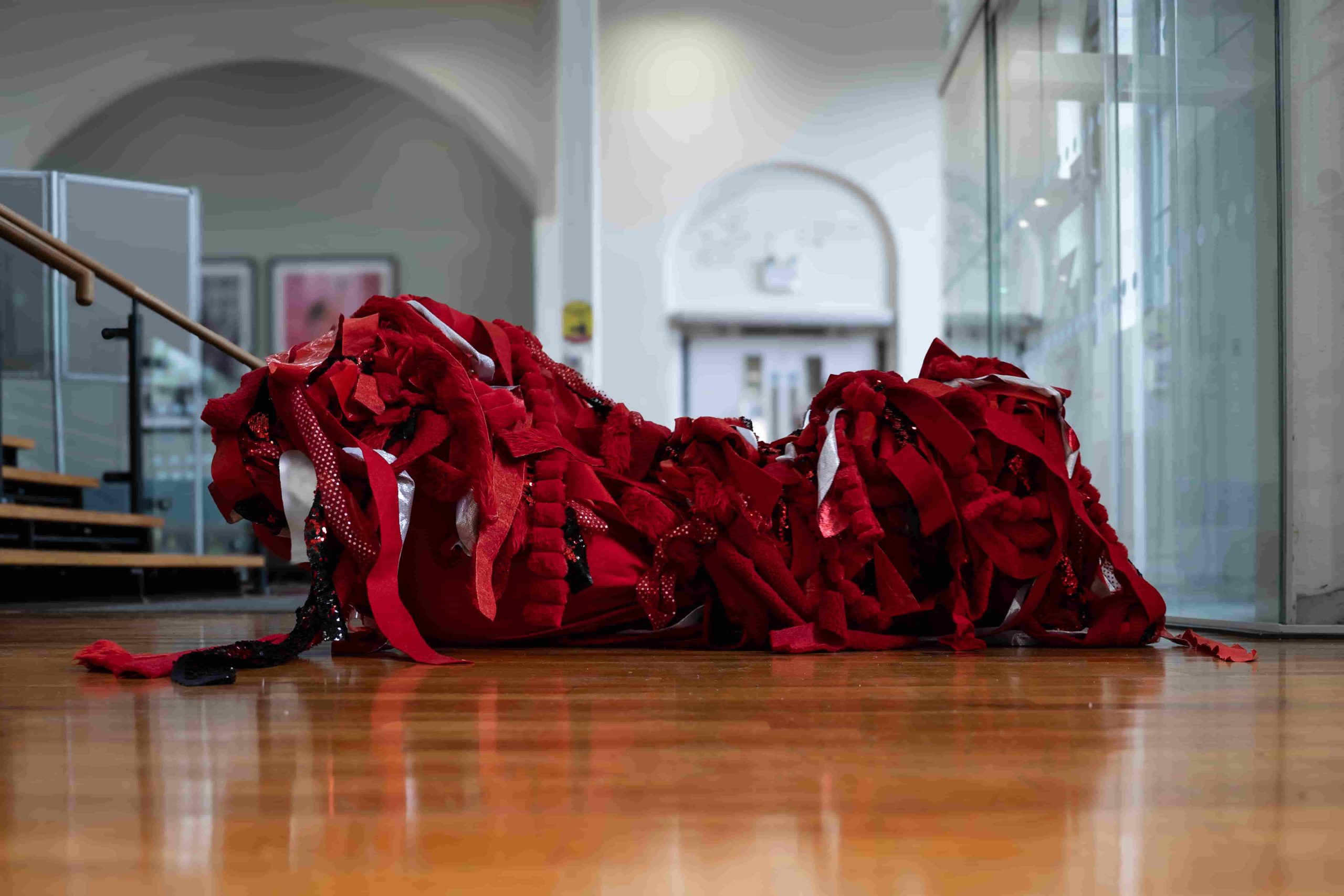
Over five days, the artist slowly moved across the university grounds, queering time and space through embodied neurodivergent movement. Wearing a red body sock adapted with removable red fabric strips, the artist gradually became entangled with the institution’s physical and symbolic architecture. The pace of this work was deliberately slow, attuned to a crip temporality, a refusal of urgency, productivity, and institutional efficiency. As the artist moves, red fabric strips were left behind, as residue, as trace, as quiet disruption. These fragments mark encounters between body and institution, forming a dispersed, tentacular network across the campus. This was not a linear or goal-oriented journey, but a fugitive one, drifting through and against the grain of academic space.
The work asks: What could the university become if it slowed down? What would it look like to move at the pace of neuroqueer bodies, needs, and modes of relation? What would it mean to create, even briefly, a space held differently, a space where neuroqueer presence is not merely accommodated, but central?
“There was something more-than-human about this presence, an alterity that was paradoxically also familiar. It was like an invitation, for example I started wondering: could I slide through the corridor with the entirety of my body? Could I rest by laying down on the floor of the canteen?” Exhibition Visitor