Structural Collapse was a thirty-minute live performance developed from an autistic perspective, drawing on lived experience and neurodiversity discourse to explore how autistic embodiment can subvert neurotypical and capitalist structures of time, space, attention, and visibility.
The work responds to autistic experiences of viewing and being viewed, particularly the demand for frontal modes of communication such as eye contact, which many autistic people experience as uncomfortable, exhausting, or overwhelming. This experience is often described as akin to staring into a blinding light while conversing. In response, the performance refuses conventional modes of visibility and address.
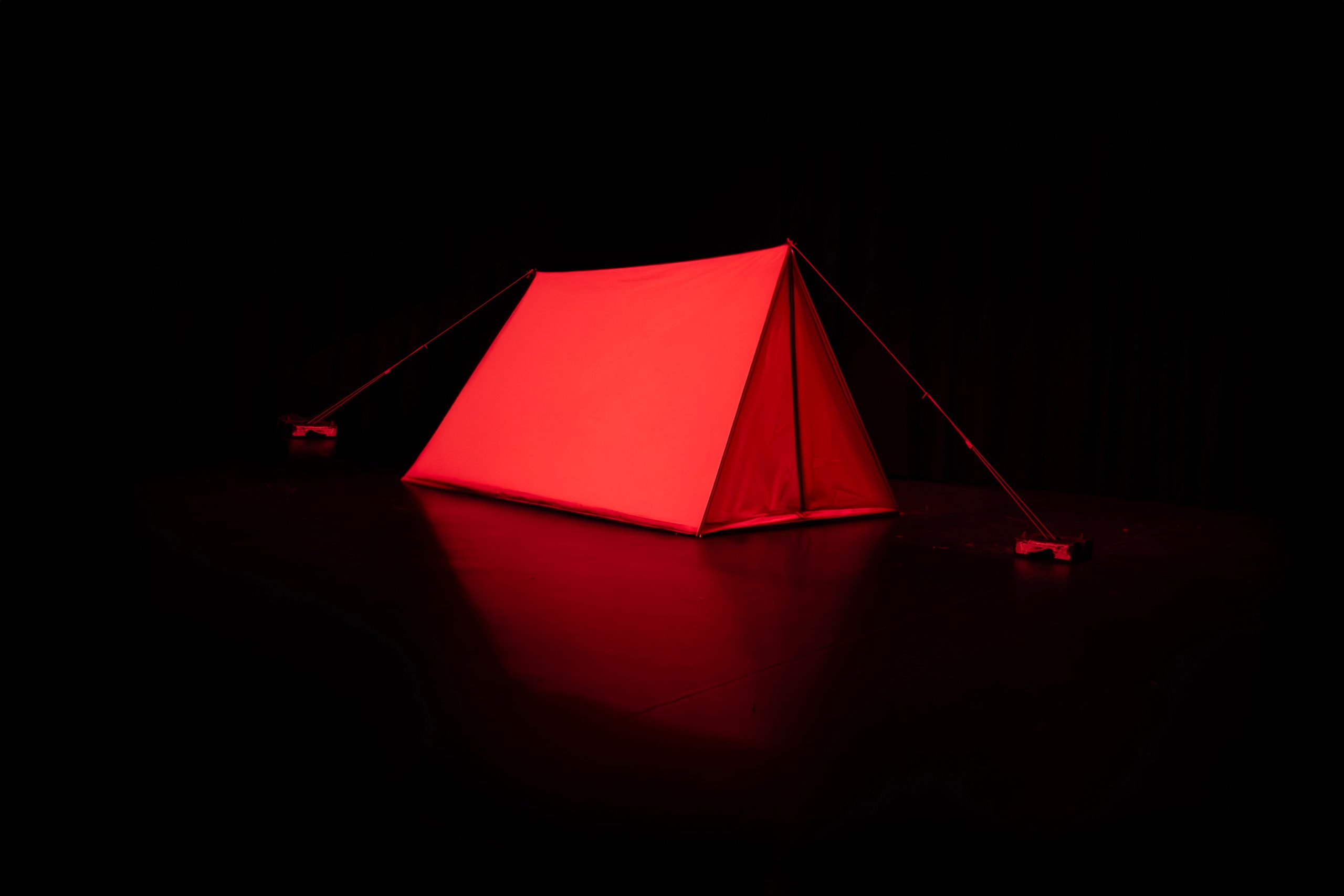
This performance was produced and situated in a black box space within an academic institution as part of the artist’s MA studies, positioning the work within an environment shaped by neuronormative expectations of attention, exposure, and behavioural compliance. At the centre of the room stood a red apex tent, inspired by pedagogical hideouts that allow engagement without full exposure. A red spotlight slowly faded in and out over the duration of the work, mirrored by a heartbeat sound score, evoking cycles of scrutiny, withdrawal, and sensory attunement.
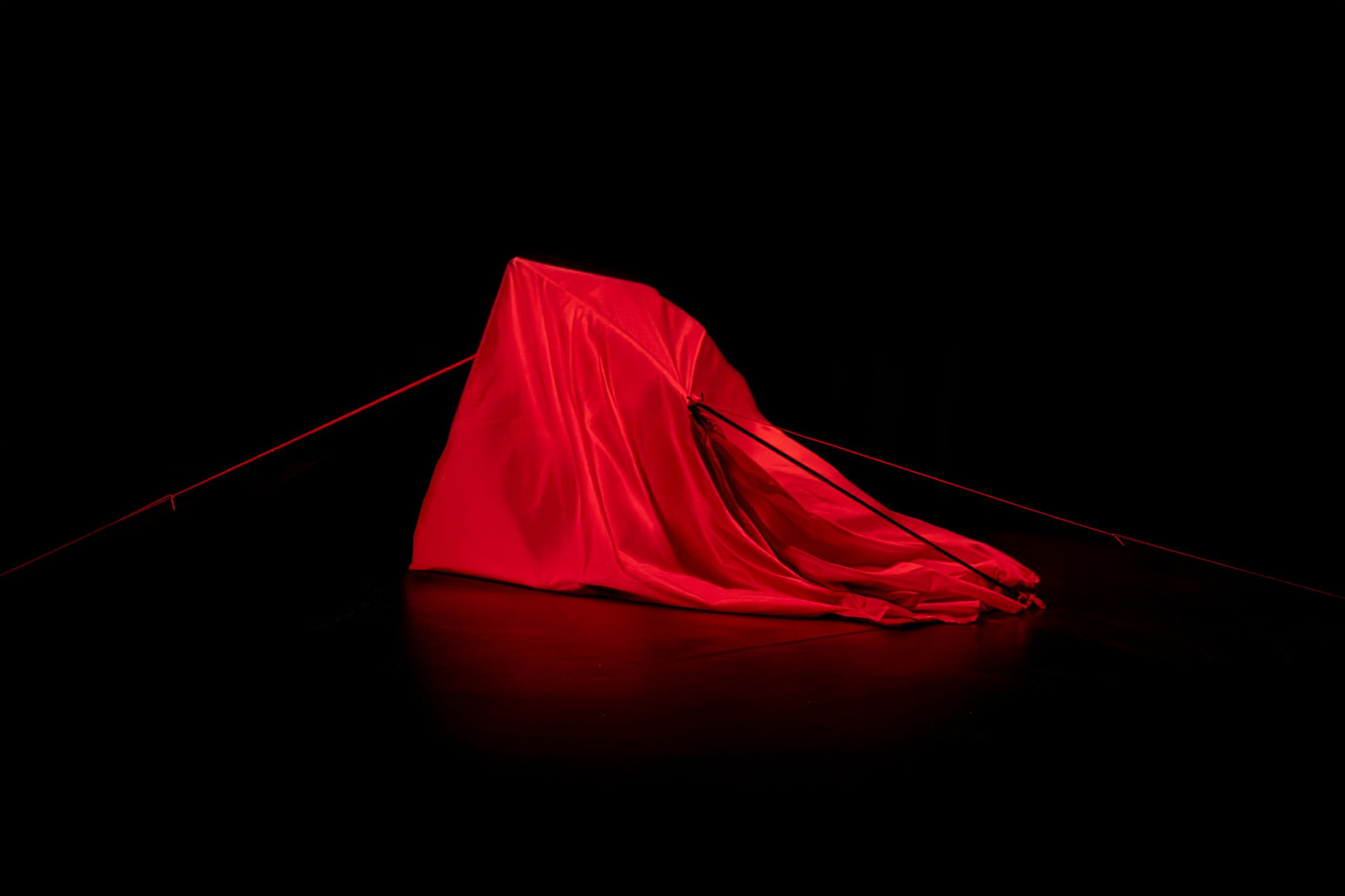
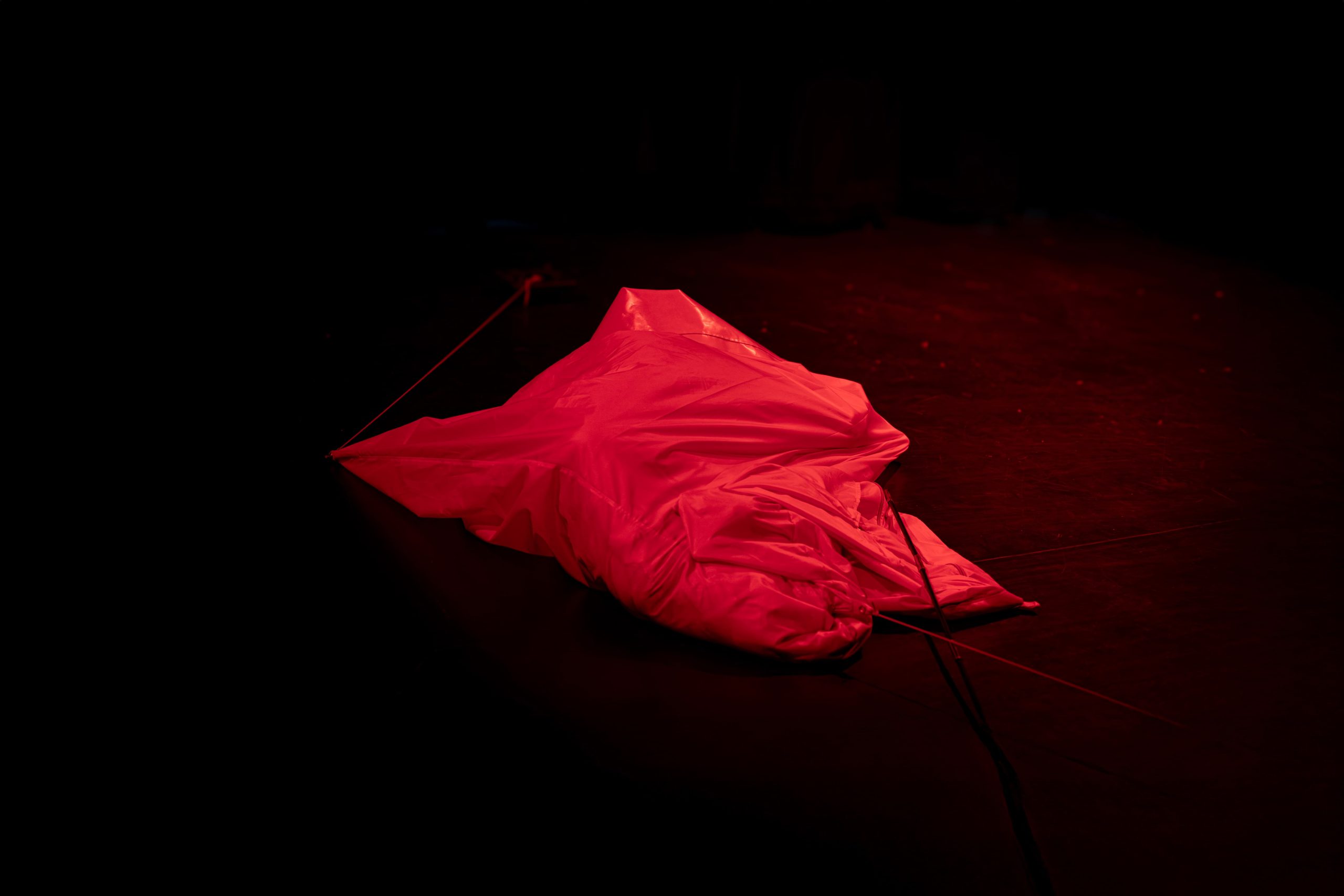
Inside the tent, the artist’s body was encased in a modified body sock applying deep pressure, supporting continuous stimming. Often misread as incoherent, stimming is presented here as a relational practice and an ongoing dialogue with the environment. When the tent unexpectedly collapsed, its structure transformed into a cocoon-like form. This moment became generative rather than disruptive, embodying autistic temporality, adaptability, and concealment as acts of refusal.
By rejecting narrative, spectacle, and visual access, Structural Collapse reconfigures performance as a neuroqueered encounter grounded in rhythm, duration, and authenticity.
“An utterly gripping and arresting performance, one that lingered long after it ended.” Exhibition Visitor